

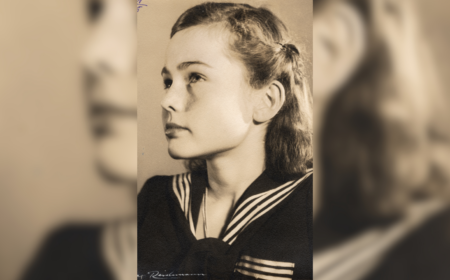

Alfred Wells, born in 1916 in White Plains, New York state, in the US, always wanted to become an architect but thought that law and diplomacy were more proper careers. It wasn’t until 1966, when he retired after 25 years in the US Foreign Service, that he began his lifelong career dream and graduated in 1970 from the Architectural Association (AA) School of Architecture in London with two degrees in tropical architecture and in urban planning. He then went on to work on several continents over the next twenty years.
While studying law at Yale in the 1930s, Alfred treasured his classes about architecture and kept detailed notes. He entered the Foreign Service in 1941 and served in Buenos Aires, Colombo, Paris, Rangoon, Vienna, Bremen, Bonn and London. In Rangoon, he lived in a houseboat that he himself built. When in Vienna, he built a small wooden house for his daughter and then had the whole structure dismantled, shipped to Mt. Riga, near Salisbury, Connecticut, and rebuilt it for her. Wherever he went, he took dozens of photos of churches, façades, pagodas, statues and other beauties of architecture.
When in Paris in 1949, he married Dee Wells, who later wrote the bestseller novel Jane. They had a daughter, Gully. A few years later, Alfred and Dee divorced amicably, and Gully grew up with her mother in London.
In 1960, he married Melissa Wells, who served as ambassador to several African countries and Estonia.
In his last post, while living in an exquisitely decorated home on Eaton Square in London, he served as executive assistant to Ambassador David Bruce.
Upon retirement in 1966, Alfred began studying architecture at AA in London. He was 50 years old, in class with much younger colleagues who had very strong opinions about the war in Vietnam. At one point, his friends convinced him to go to a protest in front of the US Embassy, where his wife was working that day, but he quietly slipped out while the students clashed with the police.
The first structure that he built, as an AA student, was a wooden cube to serve as a vacation home for the family in Carriacou, an island belonging to Grenada. He tested the structure by asking his AA student friends to help set up the cube in Brompton Square, London, much to the puzzlement of the neighbors. The cube was permanently built in Carriacou, survived several hurricanes but was blown away by US Marines in 1983 when they invaded the island. The Department of Defense compensated the Wells family for the lost cube.
In 1969, he published his first work on architecture in the AA Quarterly, about low-cost housing in Casablanca. Upon moving to Washington, DC, in 1971 he worked for Doxiadis Associates (two years), John Portman Associates (three years) and for Habitat in Haiti. In 1978, he was a senior planner in the New York City Mayor’s Office of Development.
From 1980 to 1981, Wells worked as a consultant to United Nations Development Programme (UNDP) on housing for UN employees in the poorest countries of Africa and Asia, where rent can be high and quality housing scarce.
In the seventies, he built a spacious two-story treehouse in Mt. Riga, Connecticut and a proper vacation house in Carriacou, both of which survived hurricanes. In the eighties, he refurbished a 200-year-old manor house, La Tour, in Cessy, France, just outside of Geneva. The former owner of La Tour sold it to the Wellses under the condition that they would not change the outside aspects of the property.
In 1989, he did a study, for free, for the Mozambican government to determine the correct value for compensating owners of traditional caniço homes in Maputo, the capital, as part of projects in that city.
In 2001, at the age of 85 and with free time on his hands as Melissa served as ambassador to Estonia, he wrote a guide on the many manor houses in that lovely country. He gave the rights to an Estonian publisher. The guide was one of the most popular tourist books about Estonia and inspired others to do similar works. The book can be found at antique shops there.


He applied his skills to motor vehicles as well. In 1968, he adapted a VW Kombi so that the family of four could sleep in it and cook. The family would often sleep on the weekends in the fields of England and France, and cook their own breakfast. They also took the Kombi to the Atlas Mountains of Morocco. In 1981, he adapted a Toyota Hilux to the same effect, so that the family could drive from the posting in Nairobi to Geneva, via the Sudan and Egypt. The two-month trip through the Sudan was the best trip the family ever took.
Starting in 1969 all the way until 2005, he constantly worked on a home in the small town of Agulo, on the island of La Gomera, in the Canaries, where the couple would live after Melissa retired in 2001. He died in the Canary Islands in 2014 and is missed by many people there. A local restaurant in Agulo, La Vieja Escuela, has a dessert named after him.

Alfred and Melissa are survived by their sons Christopher and Gregory, and by his daughter Gully.