

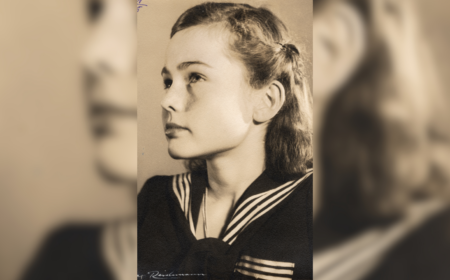

Guinea-Bissau gained its independence from Portugal in 1974, after a long guerrilla war. Cape Verde’s independence came in 1975, also from Portugal. In 1976, Melissa was named the first US ambassador to both countries, which were ruled by the same political party, the Partido Africano da Independência da Guiné e Cabo Verde (PAIGC).
Melissa was sworn in as Ambassador in Washington in a ceremony attended by her family and authorities from the two countries. This would be her first of four swearing-ins, always at the State Department building and always with her family present. Shirley Temple Black, who used to be a famous actress when she was a child, was the official in charge of the swearing-in. Larry Eagleburger, the acting US Secretary of State, joked that, thanks to Melissa’s excellent swimming abilities, the government would save on travel between Cape Verde and Guinea-Bissau.


When she arrived in Bissau, she presented her credentials as ambassador for the first time. This was to Guinea-Bissau President Luis Cabral, half-brother of the liberation hero Amilcar Cabral.

Melissa had rudimentary living accommodations and working spaces in Bissau, which was the main base for operating in both countries. Melissa, as with many other diplomats, lived in what used to be the Portuguese Army officers’ quarters, a motel-like strip of rooms near a cafeteria. “All the rooms were the same,” she explained, according to the ADST Oral History website. “There was a little sitting room, a tiny little thing, a bedroom, and then a bath. Then a little pathway out in the road going up and down this place. I lived there, the Cuban ambassador lived there, and [other ambassadors] lived there. We were all over the place. The cars would come with their little flags and things, rather cute.” Each ambassador was waiting for a house to become available and into which to move.
The embassy’s first office in Bissau was not much better. “My office, for security reasons, had no windows. In Bissau, the electricity was going out fifteen times a day; no electricity, no air conditioning, no lights. The phones don’t work. You just must get used to it. On the bookcase I had a candle and matches.”

“In Bissau, the electricity was off more than it was on,” recalls a colleague who worked at the Embassy. “Hours would go by with no electricity which meant no air conditioning (windows couldn’t be opened for security reasons), no lights and no water (because the pump wouldn’t work without electricity). Only one phone worked in the entire Embassy and luckily it was the receptionist’s phone, so at least he could receive calls from the Government offices. Sometimes the Ambassador had to speak on the phone with someone from the President’s office while standing in the Embassy’s lobby area. The Embassy’s only means of communications with neighboring Embassies was via shortwave radio.”
There was also a food shortage in Bissau so the Embassy staff arranged to have a local restaurant prepare lunch every day them. The menu varied slightly but there was always rice and goat meat. Other days they were treated to some sort of seafood whether it was prawns, lobster, octopus, oysters, or sometimes barnacles, and even hummingbirds (which he only served once because no one ate them). Whatever else the restaurant owner could find, they were just happy to have a meal.
Her younger son Gregory, who was ten, received schooling from two sources. Melissa’s husband Alfred gave him lessons using the Calvert home school materials. Gregory also attended the local Guinean school. In line with the government’s Marxist ideology, the schoolchildren had to go into the country and do physical work, called trabalho produtivo or productive labor, such as digging a ditch. Gregory loved doing this. One day, Melissa visited his class and saw the teacher reprimanding many of the Guinean students, who were resisting this work. “Why don’t you work hard like this American boy?” he asked of the children, as they leaned on their shovels.
“In Bissau in those days,” Melissa said in her ADST Oral History, “you would frequently see monkeys for sale by the road. And, of course, Gregory wanted a monkey. So, [that meant] a cage for the monkey and one more tenant in our motel quarters. Then, a few days later, he learned – not from me, I assure you! – that these monkeys, they were small monkeys and rather cute, were being sold as food – they cook and eat the monkeys.
Well, you can imagine how upset Gregory became! He was so upset, crying and angry, and rational explanations about differences in culture were to no avail. So, we had to buy every monkey that we saw being sold! Between the one gerbil and the monkeys, I think we had a total of five cages in our small living room,” recounted Melissa.
A few months after arriving in Bissau, she was invited in February 1977 to go to Lagos, Nigeria, and meet Andrew Young, who had been named by President Jimmy Carter as ambassador to the UN. Young invited her to work with him at the US mission to the UN (USUN), to be the ambassador to the UN Economic and Social Council (ECOSOC). “I told him that I thought it was dreadful to run off from my post after having just arrived,” she wrote years later. “We had just started the important negotiations of a USAID, the US aid agency, agreement with each country – Cape Verde and Guinea-Bissau. (…) I was invited to every event Andy had in Lagos – lunches, speeches, meetings and dinners. The night before I was to fly back home, I talked to Andy again and told him I would like to change my mind and work with him. But that first I had to conclude some important business with the two little countries I was accredited to. Andy said ‘Take all the time you need. The job is yours’.”
Gregory was not at all pleased with having to leave Bissau. He loved his school and his monkeys. It was only after he met Andy and his son Bo that he was won over to the idea of moving to New York.