

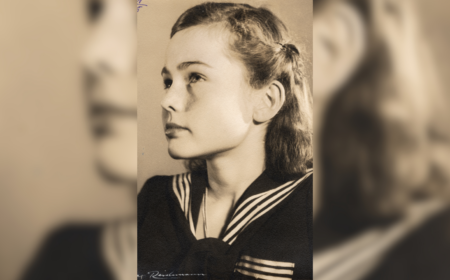

The following quoted text is from an e-mail that Melissa wrote in 2015 to a close friend.
“When I arrived in Uganda in the fall of 1979, the country had just been liberated from the grip of ldi Amin by the Tanzanian Armed Forces joined by Ugandan resistance groups. I was on a secondment (i.e. was lent) from the State Department to the United Nations Development Programme (UNDP). My title in Swahili as the senior UN official in the country was wonderful: Mama Balozi wa Umoja wa Mataifa, which translates into Madam Representative of all the Nations in the World.
But life was definitely not wonderful. I arrived in Kampala as the entire UN family was being evacuated. Two staff members had just been murdered – one for his transistor radio, the other for his wristwatch. The mission for the time being was reduced to my deputy, one program officer, a secretary and me.
The first night in the place where I was staying, I heard gunfire and rushed out on the balcony to see what was happening. Another round of gunfire hit the wall near where I was standing. I dropped to my knees and crawled back into the room (that’s what they do in the movies) and into the bathroom, where I stayed until the gunfire stopped. After that, I never again went out to see why there was gunfire. This experience served me well in Uganda, Mozambique and Zaire.
Gradually we increased our staff from the evacuees in Nairobi who were willing to work in Uganda without dependents. My husband and younger son remained in Nairobi and never moved to Uganda. While our mission was to fund development projects, it became increasingly clear that Uganda was in desperate need of humanitarian aid. In northeastern Uganda, in an area called Karamoja, there was downright famine. The Karamajong, a name covering a group of semi-nomadic tribes in that region, were fighting each other with weapons looted from a large arsenal that ldi Amin had kept in the local capital Moroto. [Melissa would comment at the time that an AK-47 machine gun was so cheap that it was worth a sack of potatoes]. Those tribes living near Moroto had a clear advantage over the tribes living far away. The World Food Program immediately mounted a massive program and I, as the senior UN official, commandeered all trucks from other UN agency projects to transport the food to Karamoja. I traveled to Karamoja every week to see how the food was being distributed by local missionaries whom we entrusted with that task.
One evening driving from Kampala to Entebbe where I lived, I was held up at gunpoint, and the car was stolen. I was not hurt, but my driver was beaten up, and we were left standing on a deserted – at that hour – road waiting for someone to give us a ride to Entebbe. UNDP Headquarters in NY were very upset at what had happened to me. I explained that what Uganda really needed before any development projects was security.
But UNDP, by its mandate, could not fund any project relating to security. The reason is that by some fluke chance any such project might conceivably, years down the road, be seen as the genesis for an unsavory security force.
The following weekend, on my way to Karamoja, I saw a group of men in tattered police uniforms walking along the road. We stopped and I asked them who they were and where they were going. They said they were the remnants of a local police force and were on their way to a village where there had been some trouble.
They were doing this voluntarily and without pay. We gave them a ride and, in the car, they explained that they had been trained at the Police Academy in Exeter (UK) before ldi Amin took power. When Amin took power, he disbanded all police forces and the army and only relied on his fellow Kakwa tribesmen for security forces.
Upon returning to Kampala, I phoned Bradford Morse, the Administrator of UNDP, and asked him to agree to let me go out with my “begging bowl” to the various embassies in Nairobi and request funds to set up a police training project. Morse agreed and I contacted several embassies. The Canadians were most helpful and generous and took the lead offering the RCMP (Royal Canadian Mounted Police) to do the training. They also agreed to administer the special fund. Other embassies contributed funds and the project got going.
Unfortunately, after several months of training, I had to cancel the project. The site where the trainees were housed was attacked by rogue elements of the so-called Ugandan Army as they feared that their numerous lucrative checkpoints would be dismantled by a trained police force. Checkpoints had become infamous for people being relieved of money and belongings.
During all my years in gun-toting Africa, Uganda was my most dangerous posting.”
For more information about the carjacking, click here.
The problems in Uganda, especially the famine in Karamoja, received plenty of attention from the press. The US documentary program 60 Minutes did a report criticizing the UN’s handling of famine relief operations.
The Washington Post sent its Africa correspondent to accompany Melissa in Karamoja, including with photos. The New York Times magazine had a cover story.


Melissa lived in a room in the Lake Victoria Hotel, which was relatively safe, although shootings did occur there. She and her staff worked in an old office building that needed much repair.


By coincidence, her husband Alfred obtained an architectural work contract with the UN to check on housing for UN employees in the world’s least developed countries. As Melissa explained, he was based in Nairobi and their younger son Gregory lived with him. The older son was in college in New York.
She would come to New York occasionally to report to the UN headquarters on the situation in Uganda. On one of these visits, she took time out of her busy schedule to have dinner with the college roommate, Oscar, of her older son Christopher. She inspired him. It was their only meeting, but it had a big impact on both. Click here for Oscar’s memories.

When Melissa left Uganda, her staff gave her an album with the photos of the UN staff.
In 1982, she spoke at the UN Disaster Relief Organization about her work and in 1984 she published an article in a technical magazine, Ekistics.
In 1992, Melissa went back to Uganda for the first time since leaving in 1981. Everything was back to normal. “It was in Uganda that I was first exposed to the violence, the suffering, the tragedy of Africa, and it was in Uganda that I was healed,” she said in the ADST Oral History website.