

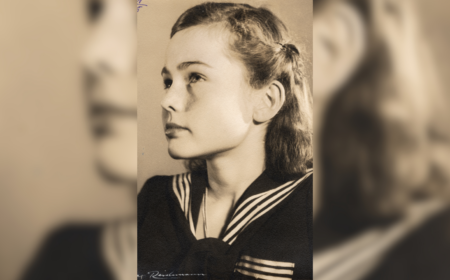

Melissa took the US Foreign Service exam three times. “First time I took it, I was bowled over,” said in her ADST oral history. I’d never seen an exam like this. I never covered the territory. I got a terrible grade. Then it came up again, and I took it, and I missed by one point. I became better at learning how to take the exam. Now, most of the kids learn how to take the exam but we didn’t do that in those days. So then when I took it for the third time, I got a very good grade. Then I was called fairly early for my oral examination.”
The oral examination lasted two hours. There was an unwritten rule that Foreign Service women, once they married another US diplomat, would move with their husband and resign. “In those days, all women taking the exam were prepared for the inevitable question, which is never asked nowadays, ‘Miss X, what are your marriage plans?’ If you say, ‘I would like to get married sometime’ but then they say ‘You can’t combine a career with marriage. Don’t waste our time.’ My ploy was I was going to try to make them laugh and drop the subject and move on to something else. So about five minutes into the exam. ‘Miss Foelsch, may I ask, what are your marriage plans?’ I had rehearsed this carefully. It helps to be on stage. ‘I’m nearly six feet tall and I weigh two pounds more than Sugar Ray Robinson (a famous boxer) and I just can’t find the right guy.’ And they laughed. It’s a stupid answer.”
In her written application, she made it clear that she was aware of the Foreign Service’s policy on women marrying – even though it was never on paper. Her application also showed how she had financed her own life with little help from her parents. She had an idea of what life was like in the Foreign Service thanks to press reports and a booklet published in 1955.
Melissa Foelsch joined the US Foreign Service on September 11, 1958.

A photo of the people joining the Foreign Service that year shows that she was the only woman. There is another woman in the photo, who was the secretary of the training course. Melissa wrote on the photo: “As of 1992, I outlasted and outrank all of them.”

Her first assignment was in Intelligence and Research, INR, as an analyst. “We used to have duty that would rotate. The most junior officers of the incoming class would take on the early morning briefing, which meant getting to the State Department building in downtown Washington by six o’clock in the morning or something like that, reading the cables, and then having it all battened down to give a briefing at eight o’clock, eight-thirty. This meant, of course, being out on the streets by five-thirty, five-fifteen or so! Unbeknownst to me, my male colleagues of the same rank got together and said, ‘Let’s spare Melissa this job.’”
Her male colleagues wanted that I need not get up and take the risk –they knew I didn’t have a car–getting to the Department by six o’clock. “So they said, ‘We’ll just rotate. We’ll spare Melissa this.’ But at the same time, they were keeping me from a very interesting aspect of my job!
But you see, I cannot in any way say that it was anything but well-intended. I found out about this, because two or three rounds went by and I said, ‘Hello? When’s my turn?’
They said, ‘Look, we talked to the boss.’
‘No way!’ Then I had to pull my way into this thing,” she recalled.
On April 1st of each year, each Foreign Service Officer was asked to fill out a form indicating what their first choice for a post would be. For the first two years, Melissa put Elisabethville (now Lubumbashi) in what is now the Democratic Republic of Congo. Her dream would come true thirty years later when she was posted to Kinshasa, the capital of that country – and had to close that consulate.
Shortly after joining the Foreign Service, Melissa met her future husband, Alfred Wells, who was 16 years older than her and had joined the Foreign Service in 1941. He had been married and had a nine-year-old daughter, Gully who was living in London. Alfred and Melissa quickly fell in love.

When Melissa knew she was pregnant, they announced their engagement in the New York Herald Tribune on May 7, 1960, and married in mid-1960 in Los Angeles. Their first son, Christopher, was born in December of that year.

A few months later, however, the couple had a major falling out and got divorced. Alfred moved to the US Embassy in London. With this dramatic separation, Melissa became the Foreign Service’s first single mother, a situation that its human resources department had never faced. That unwritten rule about married women leaving didn’t cover her predicament.
“After about two weeks, I was at work and my phone rang,” Melissa wrote in a memoir. “I answered and the caller identified himself as John Jova. Everyone knew that name – he was the chief of personnel operations! I swallowed hard, didn’t know what to expect. ‘Mrs. Wells, I hear you are interested in a foreign assignment. Where would you like to go?’ I almost fell out of my chair! I was an FSO-8, the lowest rank of Foreign Service Officer, being asked where I would like to be assigned?!
I collected my wits and explained that I had a very young son and needed a healthy post and one where I could afford help to look after my son. Jova apparently was looking at a list and suggested Trieste. I replied that I spoke Italian and that would be great. Then Jova said: ‘No, how about Trinidad, that might be better?’ I readily agreed.”
So, Melissa, who spoke German, Spanish and Italian, was sent to a post where they speak English.